
Moisture is the number one killer of wood floors in Metro Vancouver. Our wet winters, drier heating season, and damp coastal air put wood through constant stress, and the floors that fail almost always fail because moisture was not managed. The good news: nearly every moisture problem is preventable with the right steps before, during, and after installation. Here is how to avoid moisture problems in a Vancouver wood floor.
Key takeaways
- Most wood-floor failures here trace back to moisture, not the wood itself.
- Test the subfloor and acclimate the wood before installation, every time.
- Keep indoor humidity steady, around 35 to 55 percent, year-round.
- Engineered hardwood handles our coastal swings better than solid.
Start before the floor goes down
The most important moisture work happens before installation. A concrete slab must be moisture-tested, and a wood subfloor checked, so the floor is not laid over a base that is too wet. Skipping this step is the single most common cause of cupping and adhesive failure in Vancouver homes.
Acclimate the wood
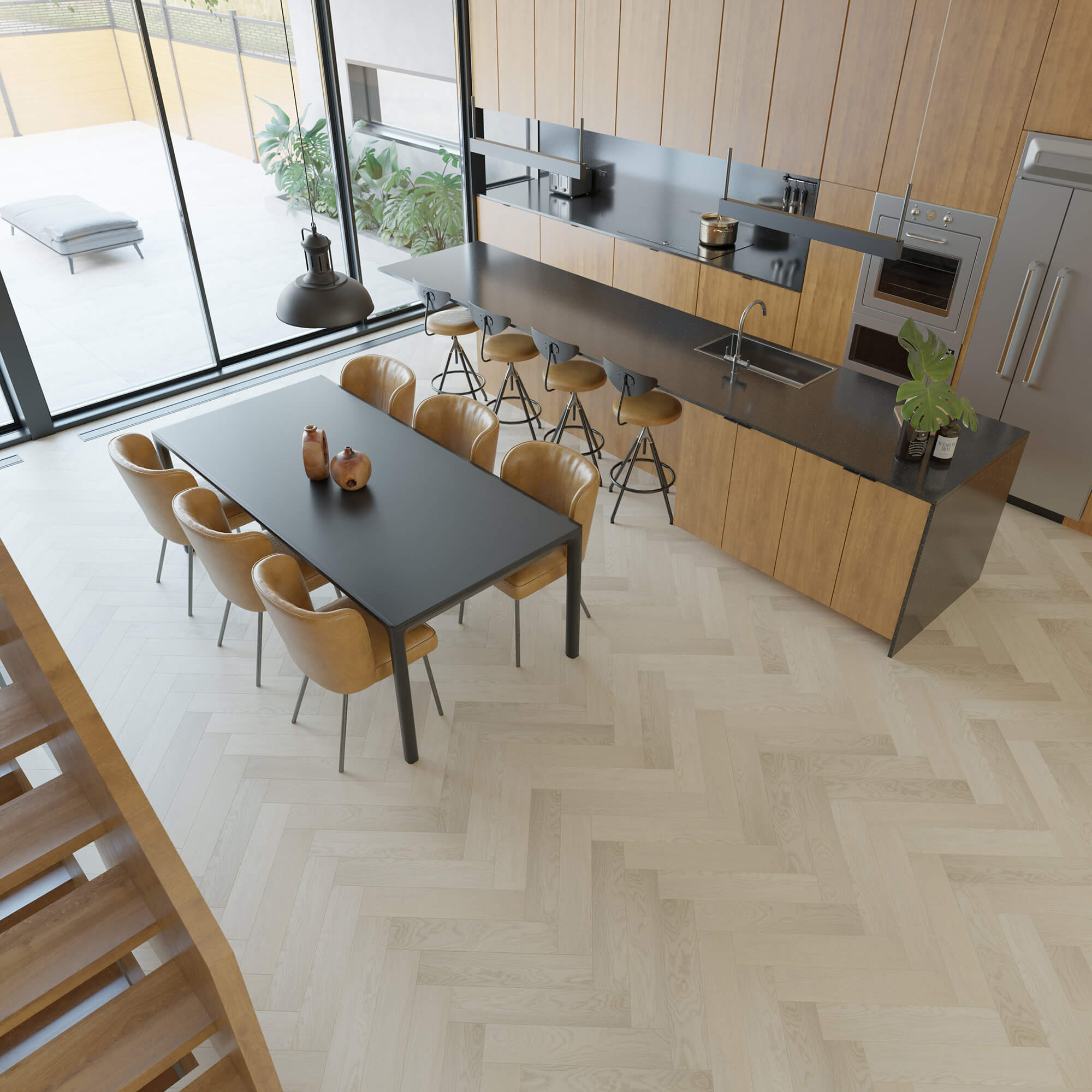
Wood needs to adjust to the home’s real living conditions before it is installed, not to a cold or freshly built space. Running the heating or HVAC for several days first, and matching the wood’s moisture content to the room, lets the floor settle where it will actually live. Rushing this is how gaps and cupping appear within a season.
Control humidity year-round
Once the floor is in, steady indoor humidity is what keeps it flat. Aim for roughly 35 to 55 percent relative humidity: a dehumidifier in the wet months and a humidifier during dry heating spells keep wood from swelling or shrinking. A simple hygrometer turns this into a habit.

Choose the right product for the coast
Product choice is part of moisture management. Engineered hardwood’s cross-layered core resists the seasonal movement that our climate forces on solid wood, which makes it the safer default over concrete, below grade, and in humidity-prone spaces. In the wettest areas, waterproof flooring removes the risk entirely.
Everyday habits that protect the floor
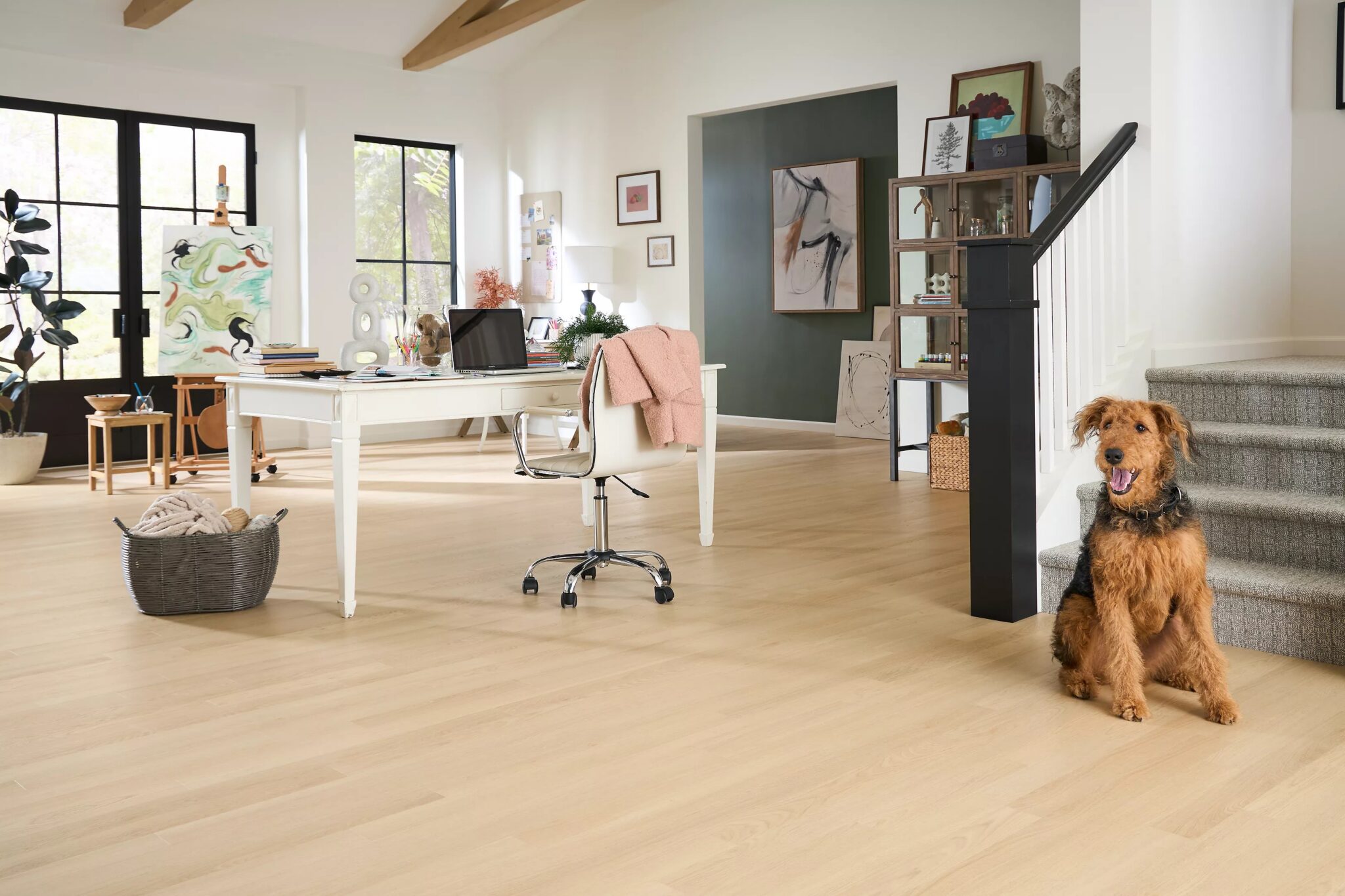
Wipe spills promptly, use mats at wet entries, and avoid wet-mopping hardwood. These small habits, combined with stable humidity and the right product, are what let a wood floor last for decades on the coast.
How Canadian Home Style helps
We test, acclimate, and install wood floors for the way Vancouver’s climate actually behaves, and help you keep them stable afterward. Local guidance from our North Vancouver showroom.
Book a showroom consultation or request an in-home consultation, and our team will help you choose and protect a floor built for the coast.
Related guides
Frequently asked questions
What causes most wood floor moisture problems?
Usually skipping subfloor moisture testing or acclimation before installation, or letting indoor humidity swing too far afterward. Nearly all of it is preventable.
What indoor humidity protects a wood floor?
Around 35 to 55 percent relative humidity, kept steady year-round with a dehumidifier in wet months and a humidifier in dry heating spells.
Is engineered hardwood better for moisture?
Yes. Its cross-layered core resists the seasonal movement our climate causes, making it the safer choice over concrete and in damp spaces.