
Vinyl plank and engineered hardwood are the two floors most Metro Vancouver condo owners choose, and the good news is that both can pass your strata’s sound rules with the right underlay. The real question is which one fits your unit, your budget, and your building. Here is an honest comparison for condo living on the coast.
Key takeaways
- Both luxury vinyl and engineered hardwood pass most Metro Vancouver strata ratings when paired with a quality acoustic underlay.
- Vinyl wins on waterproofing and price; engineered hardwood wins on warmth, feel and resale value.
- Sound performance comes from the underlay and assembly, not from the surface you choose.
- The right pick depends on your unit, your budget, and how long you plan to stay.
Both can pass strata, with the right underlay
Neither surface passes on its own. Over a concrete slab, both vinyl and engineered hardwood need a cork or rubber acoustic underlay to clear a condo impact-sound target. Choose the assembly to match your building’s bylaw and either floor can be approved.
Luxury vinyl plank in a condo
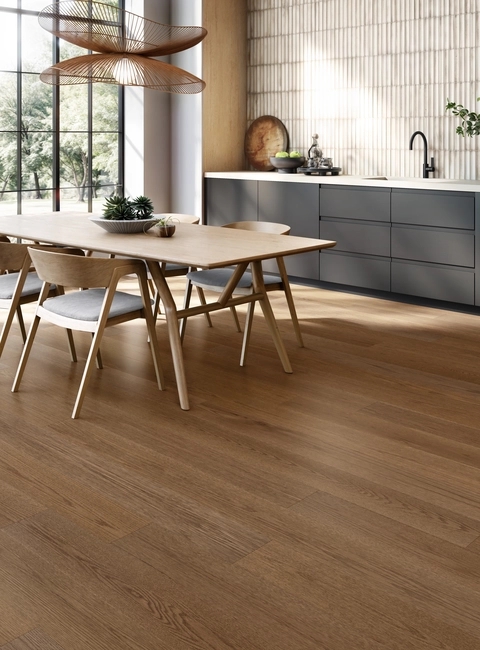
Luxury vinyl is fully waterproof, hard-wearing, and the most budget-friendly of the two. For rentals, busy households, pets, and below-grade or moisture-prone units, it is a practical, low-stress choice. Quality SPC vinyl looks convincingly like wood and shrugs off spills that would mark real hardwood.
Engineered hardwood in a condo
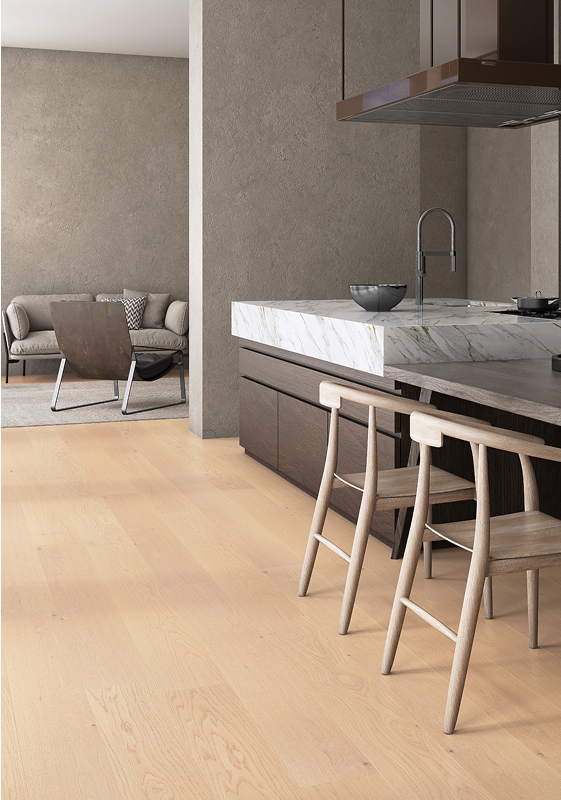
Engineered hardwood is real wood over a stable core, so it brings warmth, a premium feel underfoot, and the resale appeal buyers respond to. It is dimensionally stable enough for the coast’s humidity swings, can be refinished depending on the wear layer, and elevates a condo the way vinyl cannot quite match.
Water, warmth and the coast
Vancouver’s damp climate rewards stability. Vinyl is immune to moisture, while engineered hardwood handles seasonal humidity far better than solid wood. For entries, kitchens and anything below grade, vinyl has the edge. For living and bedroom spaces where feel and value matter most, engineered hardwood is hard to beat.
Cost and resale
Vinyl costs less to buy and install, which makes it the value pick. Engineered hardwood costs more but tends to return it at sale, especially in owner-occupied units in desirable Metro Vancouver buildings. Match the spend to how long you plan to stay.
Which should you choose?
Choose vinyl for waterproofing, durability and budget. Choose engineered hardwood for warmth, feel and resale. Either way, the underlay is what makes it strata-compliant, so build the full assembly to your building’s rating.

Which one actually passes strata
Here is the part most comparisons miss: on its own, neither vinyl nor engineered hardwood passes strata. What passes is the assembly, and the deciding component is the acoustic underlay beneath the floor. Both materials can clear a building’s impact-sound target when paired with a strata-rated underlay, and both can fail over cheap builder foam. The strata council is approving the system, not the plank.
So the honest answer to “which passes?” is “whichever one you build correctly.” Engineered hardwood floated over a quality acoustic underlay, or rigid vinyl with a rated acoustic pad, can each hit the same IIC number. Choose based on how the floor will live in your condo, then build the assembly to clear your bylaw.
The real comparison for a concrete condo
On moisture, vinyl has the edge. A concrete slab holds moisture, and rigid-core vinyl is waterproof and largely indifferent to it, while engineered hardwood needs a moisture-tested slab and the right vapor management first. For a high-rise on a slab, that makes vinyl the lower-risk install in many units.
On feel and resale, engineered hardwood leads. It is real wood underfoot, warmer and more substantial, and it carries the resale appeal buyers attach to hardwood. Vinyl is tougher against scratches, dents, and spills, which suits busy households and rentals, but it reads as vinyl to a discerning buyer. Cost usually favours vinyl, though premium rigid-core products narrow the gap.
What goes in your strata package, either way
Whichever you choose, the council wants the same evidence: a spec sheet showing the assembly’s impact rating, the specific acoustic underlay product, proof of liability insurance naming the strata, and your installer’s coverage. The fastest approvals are the ones where the underlay is named and its rating is documented. Leave the underlay vague and expect questions.
How Canadian Home Style helps
From our North Vancouver showroom we help you compare both in person, match the underlay to your building, and supply the spec sheets your strata needs. One local team takes it from selection through a clean, compliant install.
Book a showroom consultation or request an in-home consultation, and our team will help you choose a strata-ready floor and prepare the documentation your council needs.
Related guides
Frequently asked questions
Which is quieter in a condo?
Both are equally quiet when built on the right underlay. The acoustic assembly, not the surface, controls footstep noise.
Is engineered hardwood worth the extra cost in a condo?
In owner-occupied units in desirable buildings, the warmth and resale appeal often justify it. For rentals and high-moisture units, vinyl is the smarter spend.
Can I put either over radiant heat?
Radiant-rated engineered hardwood and radiant-rated vinyl both work, within temperature limits. Confirm the product is rated for in-floor heat first.
Is vinyl or engineered hardwood better for a concrete condo?
Vinyl is more forgiving over a slab and waterproof; engineered hardwood feels and resells better. Both can pass strata with the right acoustic underlay.
Does vinyl plank pass strata noise rules?
It can, when installed with a strata-rated acoustic underlay so the assembly meets the building’s impact-sound target. The plank alone is not enough.
Which adds more resale value?
Engineered hardwood generally carries stronger resale appeal because it is real wood, though premium vinyl performs better against daily wear.